
Invisible Disabilities Week: Breaking Down Barriers With Rosa
For Invisible Disabilities Week, Rosa is speaking out about living with a learning disability and the importance of being seen, heard and respected. Her disability may not always be obvious to other people, but it is an important part of her life. As Rosa explains: “I might not look like I’ve got a disability, but I have.” She adds, in her own memorable words, “I’m normal in a different way.”
Rosa knows how upsetting it can be when people make assumptions or speak about her instead of speaking directly to her. Recalling a recent experience, she says when she was in the community recently, someone “talked to me as if I wasn’t in the room” and discussed her disability when she “didn’t want everybody else to know.” Rosa says this made her feel “not very good” because the person “could have asked me what type of disability I’ve got rather than talk about it to somebody else.”
To challenge attitudes and help others understand, Rosa is putting on a play about her own life. “I’m doing a play to raise awareness for people with disabilities that are like me,” she says. The project grew from conversations during lockdown with her cousin’s wife – a playwright. Those conversations were saved on WhatsApp, becoming “like a podcast with all our conversations in it,” before being shaped into a play.
The production is personal, but it has also been a team effort. Rosa has driven the project herself, with support from her family. Her sister, Merlyn represents Rosa’s thoughts on stage — “she does my voice when I’m not saying anything” — while Frances handles the technical side and Rosa’s mum prepared the invitations. “It’d all teamwork,” Rosa says. “Without them, I wouldn’t do the play.”
Creating and performing the play has helped Rosa become more confident. She says she now shows that confidence “by speaking about my disability more,” She hopes the performance will inspire other people and show that having a learning disability should not stop anyone taking part, expressing themselves or pursuing an ambition. “Feel positive,” she says. “You can do things that other people can do, but just a bit slower.” For Rosa, needing more time does not mean being unable: “It just takes time to do it.”
Rosa’s play gives audiences the opportunity to listen to a life that can too easily be overlooked. It asks people not to judge disability by appearance, not to discuss someone as though they are absent, and not to assume that support means taking away a person’s voice. Instead, Rosa wants people with invisible disabilities to feel proud, positive and included. Her message for anyone who feels ignored or invisible is simple and powerful: “It’s good to be heard.” During Invisible Disabilities Week, Rosa is making sure that her own voice — and the voices of others with similar experiences — can be heard clearly.
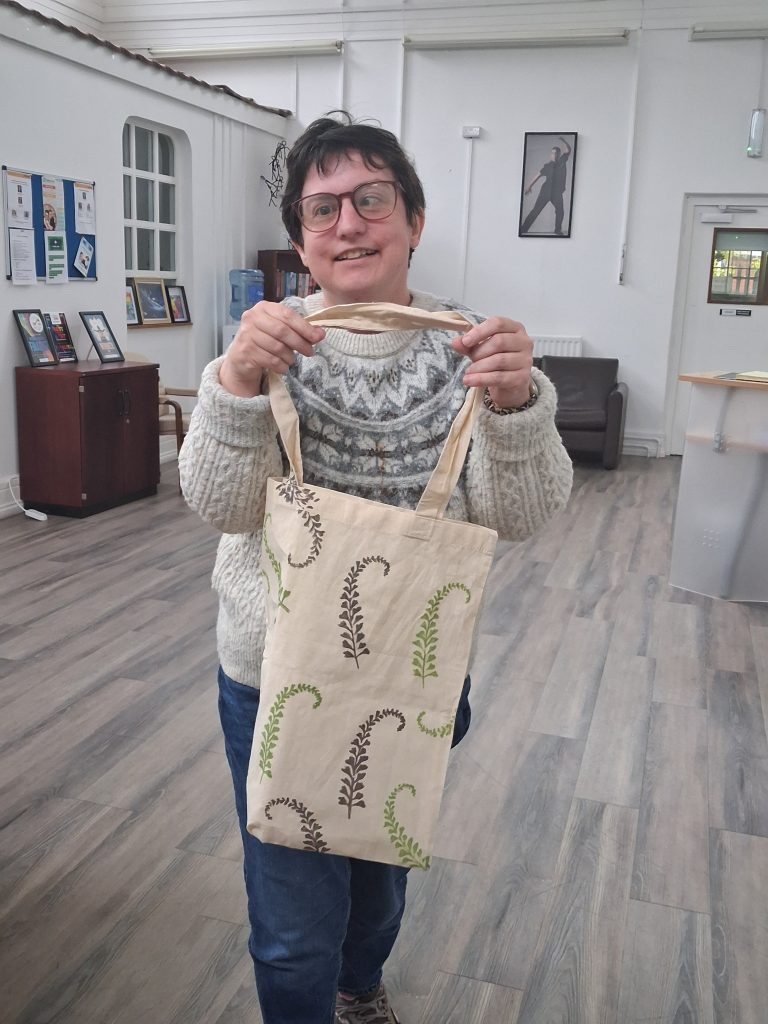
Rosa is pictured with a bag she made herself at her art class at Erdington Adult Education Centre.


